
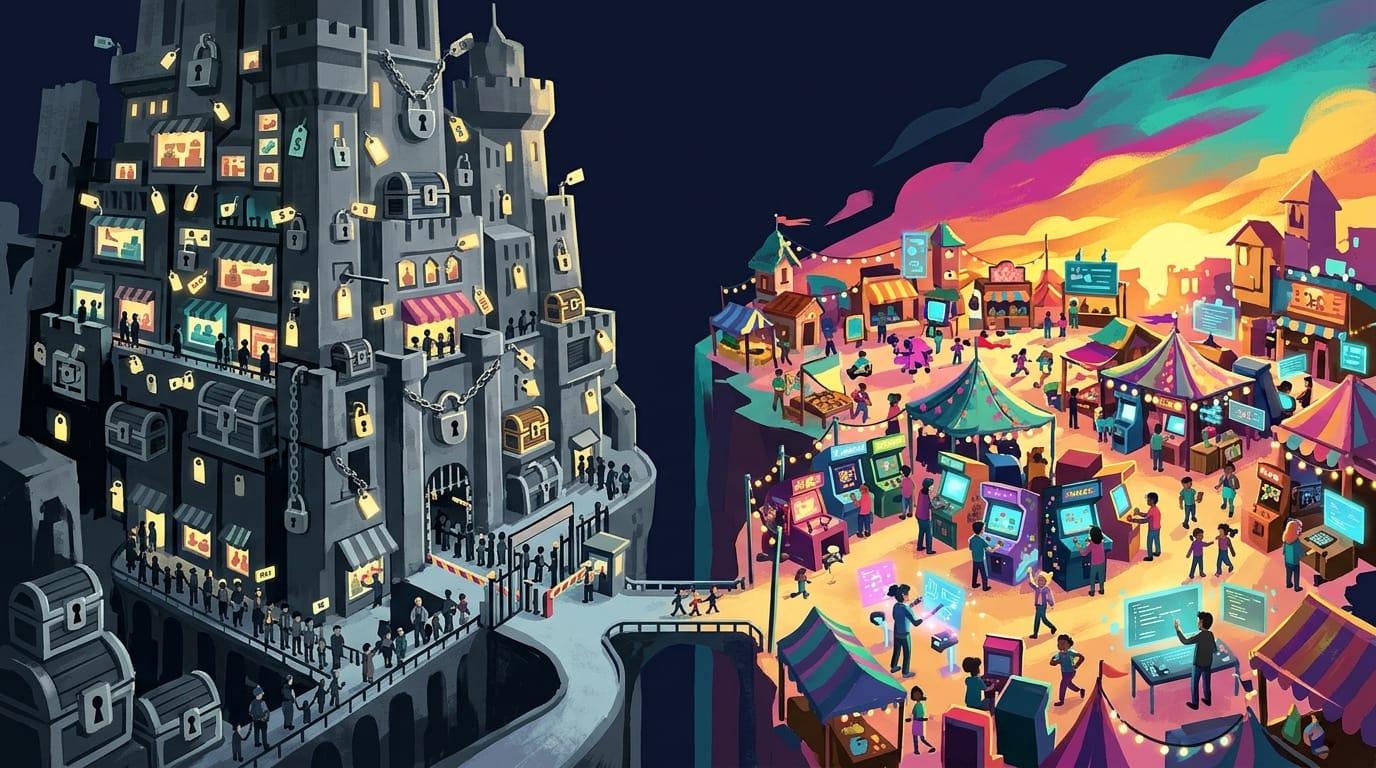
How we got here
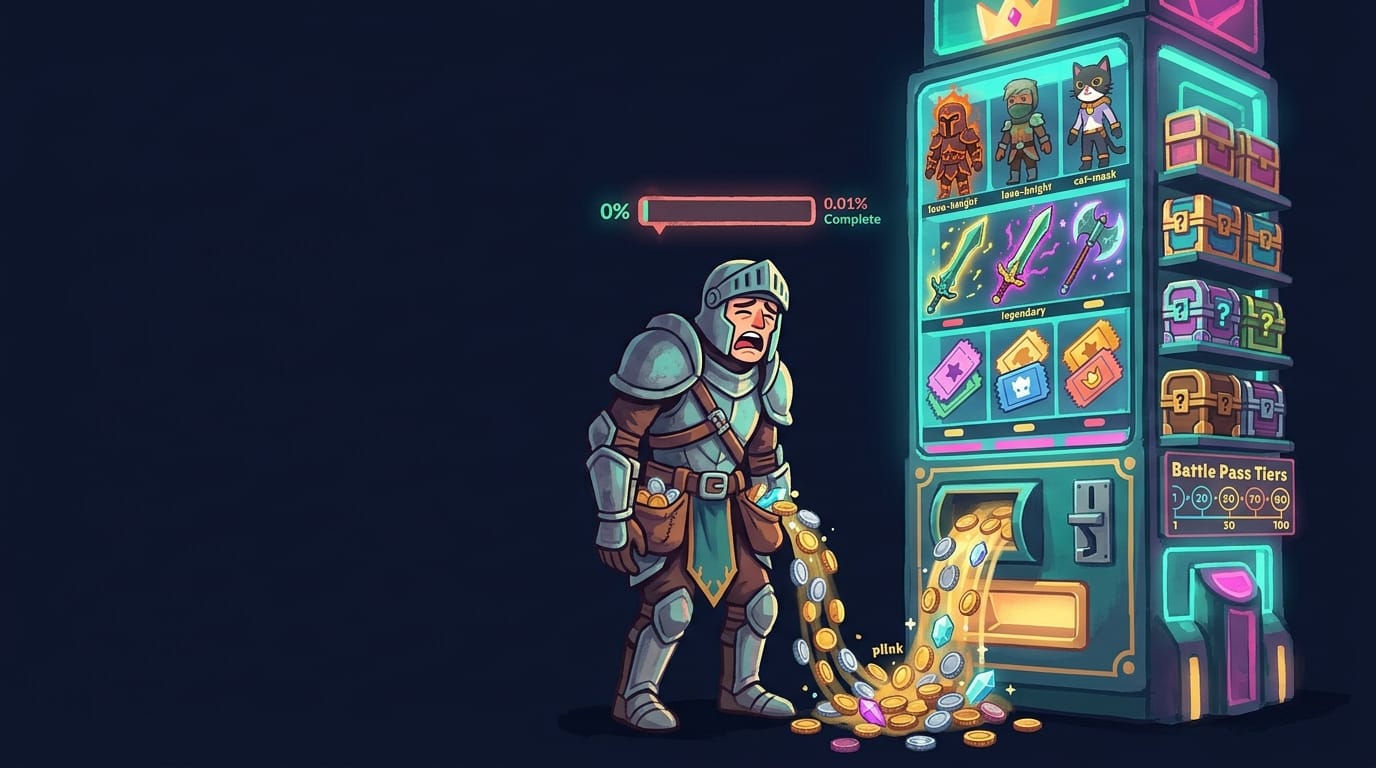
Players didn't ask for any of it. Horse armor, day-one DLC, $20 skins, loot boxes, gear you can buy with a credit card, "premium currency" priced so you always end up a few coins short. All of it came from the same math. Games got more expensive to make, the base price barely moved, and publishers needed revenue that kept coming in after launch.
The worst part is that it shapes the design. Once a game depends on its cash shop, progression gets slower on purpose, friction gets added so you'll pay to remove it, and power ends up for sale. You can feel when a game was designed around a store and not around the player. (I wrote about one recent example in my piece on Throne and Liberty's item level system.)
As long as a decent-looking game needs a 200-person team, that math stays the same.
What's actually changing
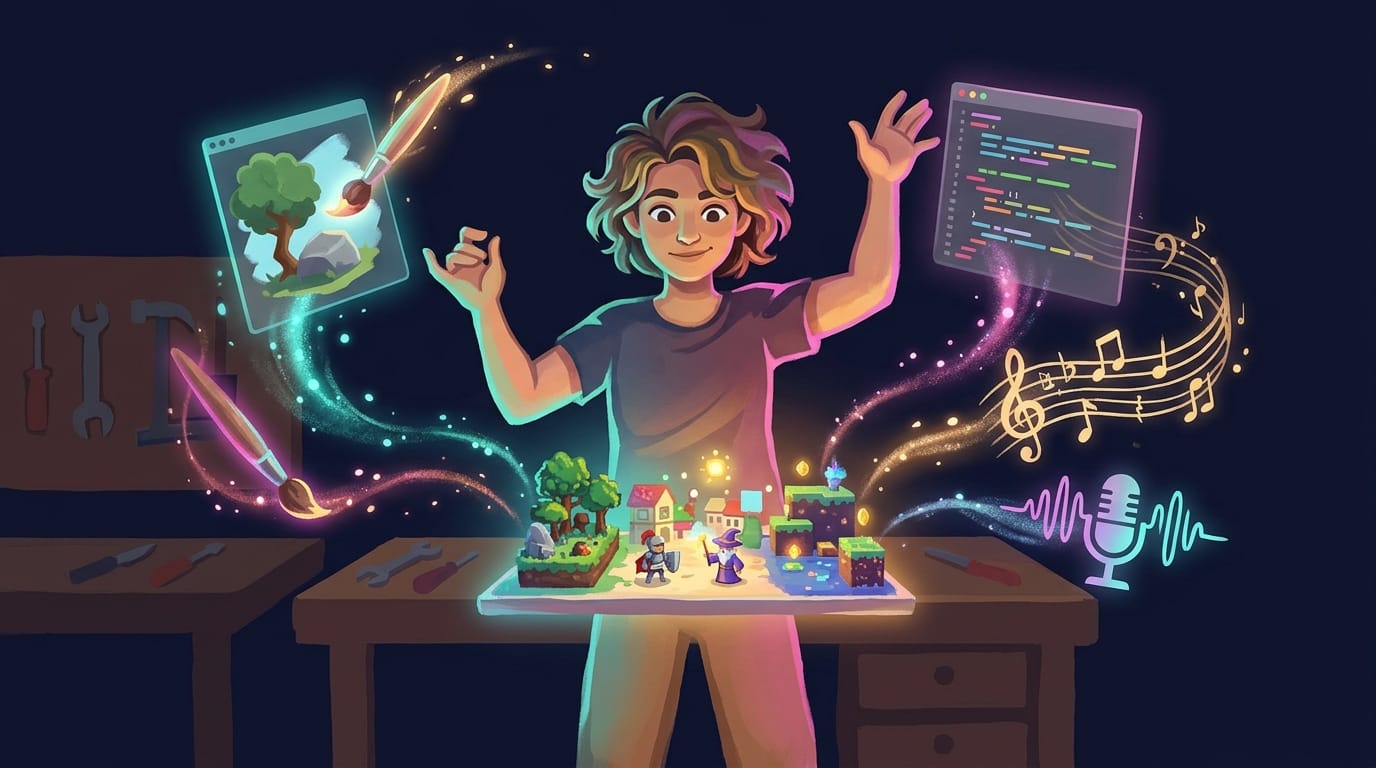
A solo developer used to need one of two things to finish a game: years of their life, or money to hire people for the parts they couldn't do. The programmer couldn't draw. The artist couldn't write netcode. Everyone needed a composer, a UI designer, and somebody who understood shaders.
That's shifting fast:
- AI coding assistants can scaffold a game loop, write the save system, debug the physics, port to a new platform, and explain an unfamiliar engine API right there in the editor. One person can now cover work that used to take a small team of programmers.
- Generative art can turn out concept art, texture variations, sprite sheets, icons and environment drafts in minutes. An artist can spend their time on direction and polish, and a non-artist can finally get something on screen that doesn't look like programmer art.
- Voice, music and sound tools are covering the last gaps: placeholder VO, adaptive music, sound effects. These used to be the first things a small team cut.
None of this replaces taste, design sense or knowing what makes a game fun. Those are still the hard parts. But the grunt work between "I have a good idea" and "I shipped a game" is getting much smaller.
The hardest parts of shipping a game used to be art and code
AI tools are getting good at both.
Why that leads to more free games
When it costs less to make a game, you need less money back from it. A solo dev who built a game in eight months with AI help doesn't need a battle pass to stay afloat. They can:
- Release it free, and live off donations, Patreon, or an optional supporter pack.
- Sell it once, for a fair price, with no store inside the game.
- Treat it as a portfolio piece or a passion project that doesn't have to earn anything.
- Ship small, cheap, real expansions in place of chopped-up launch-day DLC.
We've already seen this with modding. Counter-Strike, DOTA and PUBG's battle royale all started as free mods made by small groups who loved a game. The tools those people had were primitive next to what anyone can get now. Lower the barrier further and you get more of those people, and more of them actually finish.
Pay-to-win is a symptom
Pay-to-win isn't required to make games. It's a symptom of games costing too much to make.
The competition problem for big publishers
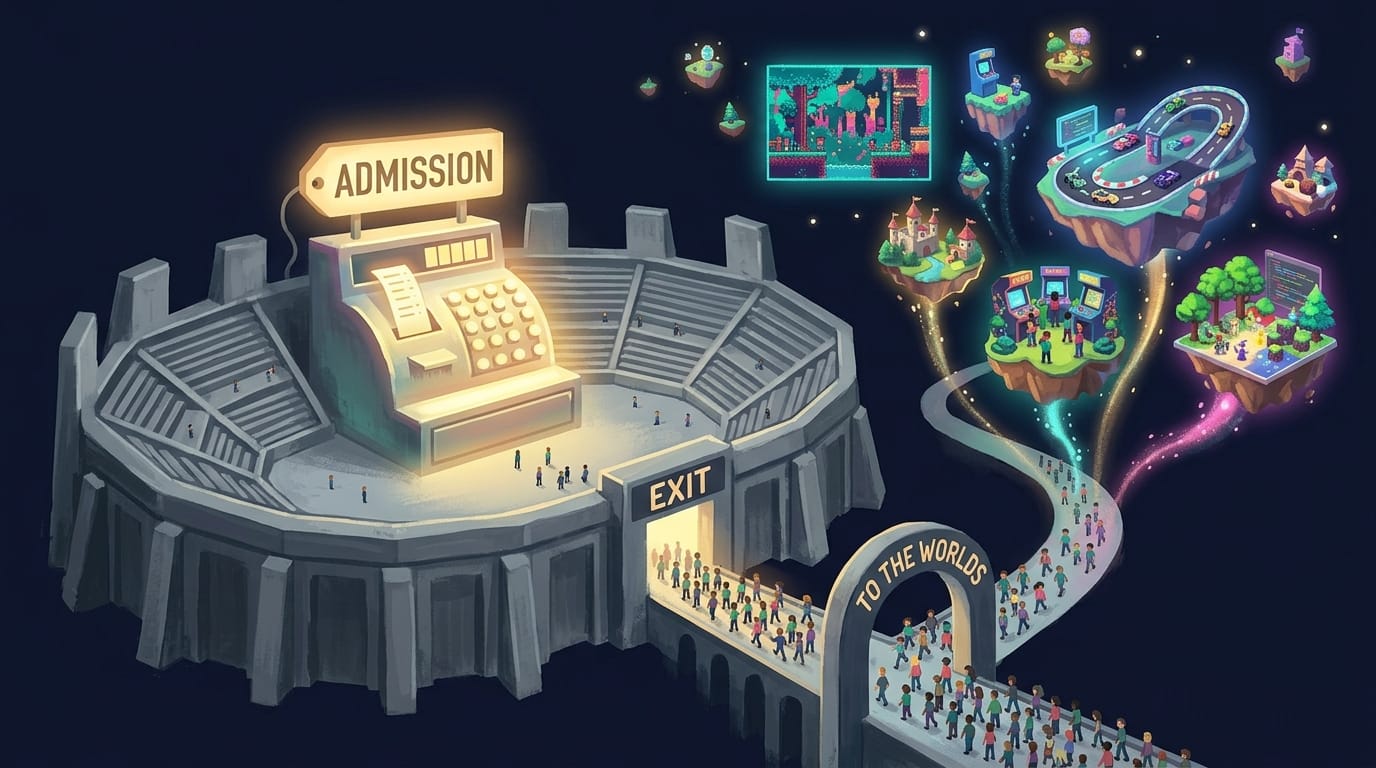
This is the part I find most interesting. Pay-to-win and aggressive DLC only work when players don't have good alternatives. If the only polished MMO or shooter on the market is the one with a predatory shop, plenty of people will put up with the shop.
But if there are fifty decent free or cheap indie games in that genre, each made by someone who actually plays it, the math changes. Every time a big studio puts power behind a paywall, players have somewhere else to go. Studios won't drop monetization out of kindness. They'll drop it when it starts losing them players.
I'm not saying AAA disappears. There will always be a market for $200M spectacle. But the middle (live-service grinders with a cash shop and a forgettable story) is going to get squeezed hard by small teams who can make something comparable and charge nothing for it.
The honest downsides
I'd be lying if I said it's all good news.
- The flood is real. Cheaper development means more low-effort games, more asset flips and more AI slop on every storefront. Getting noticed will get harder before it gets easier, and curators, streamers and communities will matter more than ever.
- Art ethics aren't settled. A lot of artists rightly have problems with how some image models were trained. Devs who use these tools should be open about it, prefer models trained on licensed or opted-in data, and pay human artists for the work that defines their game's look.
- Tools don't make a game fun. AI can write your inventory system. It can't tell you whether your combat feels good. The devs who stand out will be the ones with real design instincts. AI just makes the rest of the job easier.
Those are real problems, but they're problems with the transition. They aren't reasons to wish we could stay with the current model.
Where I think this lands
In a few years, I expect the most interesting games in most genres to come from teams of one to five people. A lot of them will be free or cheap, monetized in ways that don't wreck the design, and made by people who play what they build. Big publishers will still be around, but they'll be competing with a long tail of games that don't need your wallet to survive.
That's the gaming scene I want: fewer storefronts disguised as games, and more weird, personal, complete games from people who just wanted to make them.
If you're a dev who's been sitting on an idea because it felt too big for one person, it probably isn't too big anymore.
What do you think: will cheaper development actually push studios away from pay-to-win, or will they just find new ways to monetize? Let me know.